Crabs, oysters and the table · Eastern Shore
Blue crabs, the Shore's own
The blue crab shapes summer on the Eastern Shore: the boats that leave before dawn, the trotlines off the docks, and the long tables covered in paper and shells. Here is how it all works.
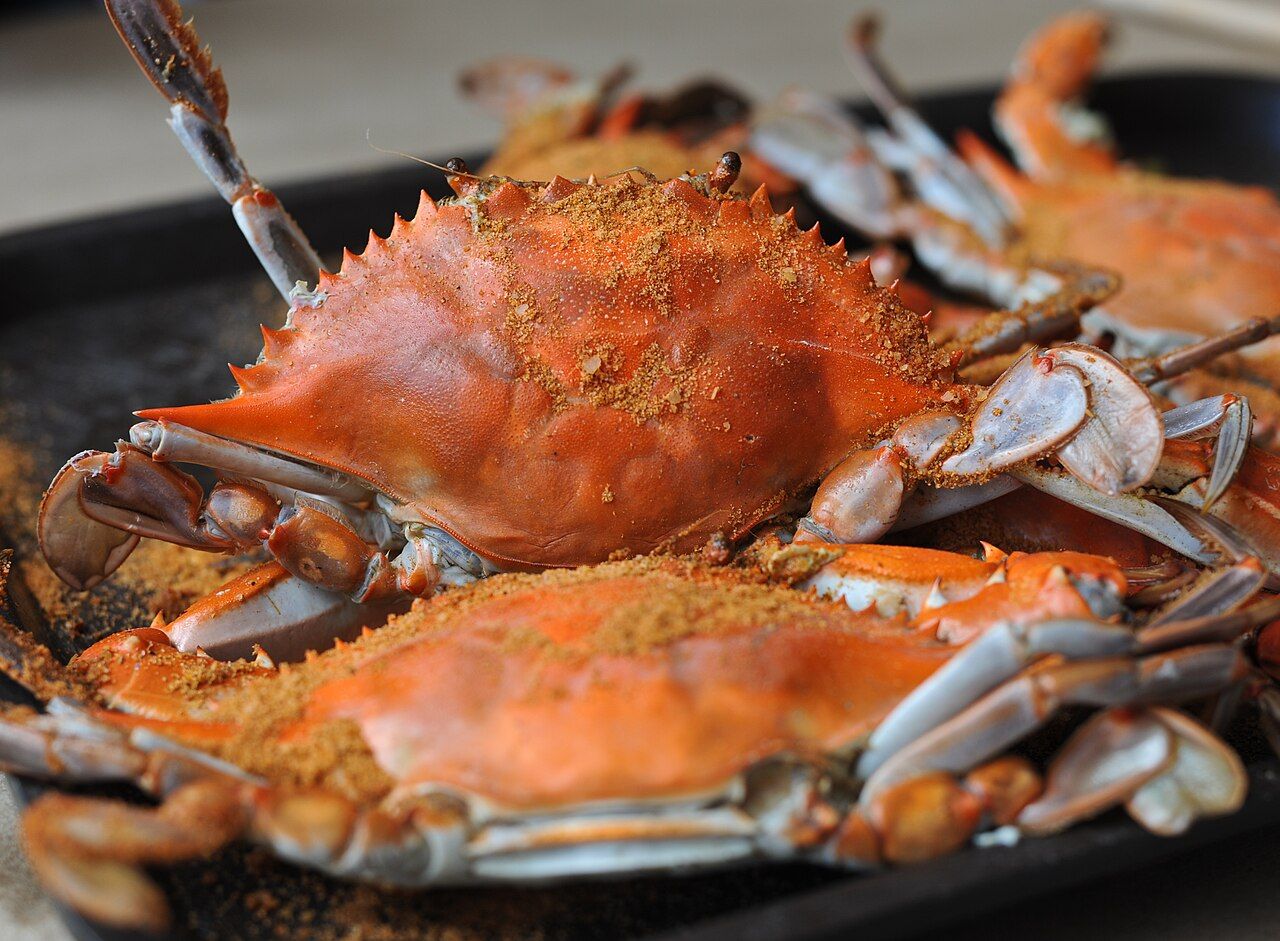
On the Eastern Shore, summer has a smell: steam, spice and salt water drying on wooden docks. It comes from the blue crab, the bay's most famous animal and the one that ties together the watermen's boats, the families crabbing off piers with chicken necks, and the tables spread with brown paper that appear in backyards and dining rooms from June into autumn. You do not need to catch a crab to understand the Shore, but it helps to know how one gets from the water to the table.
The animal
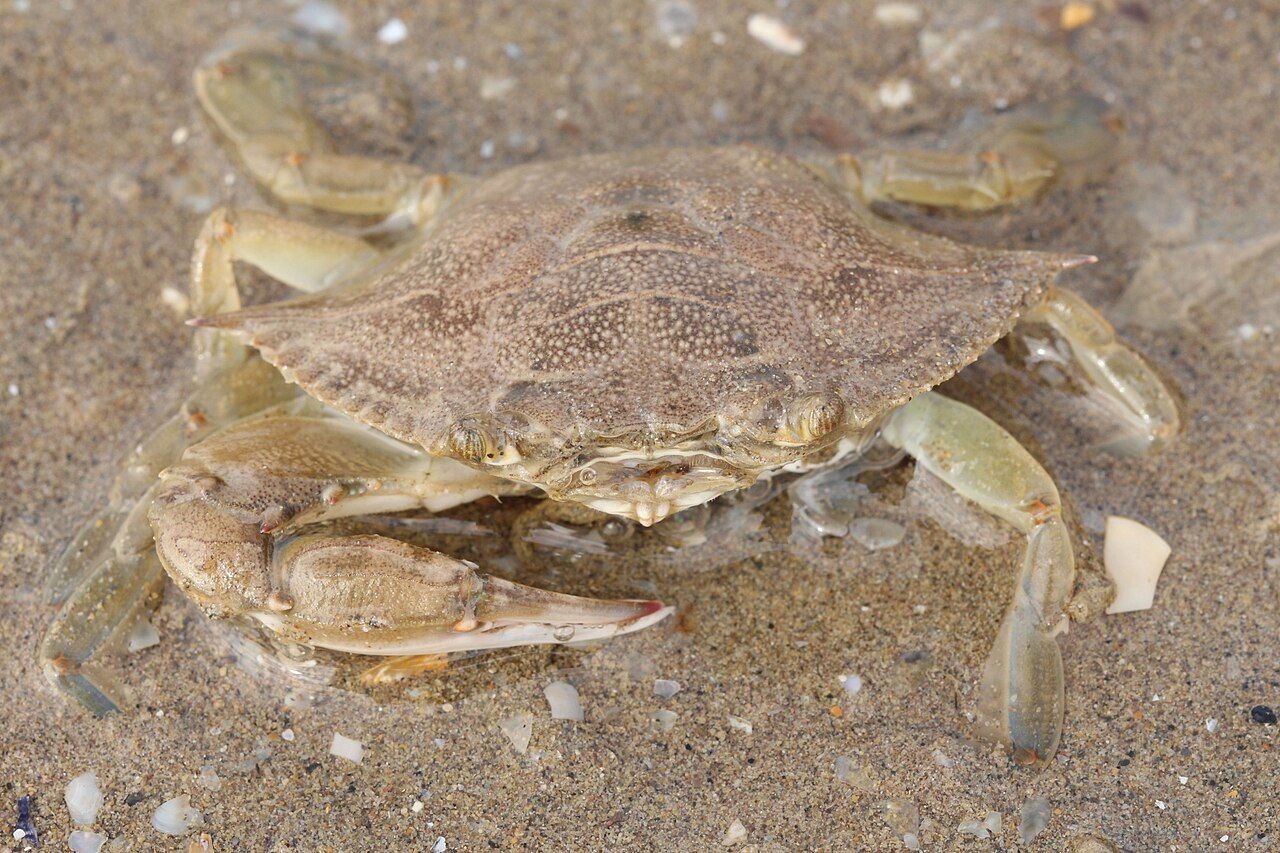
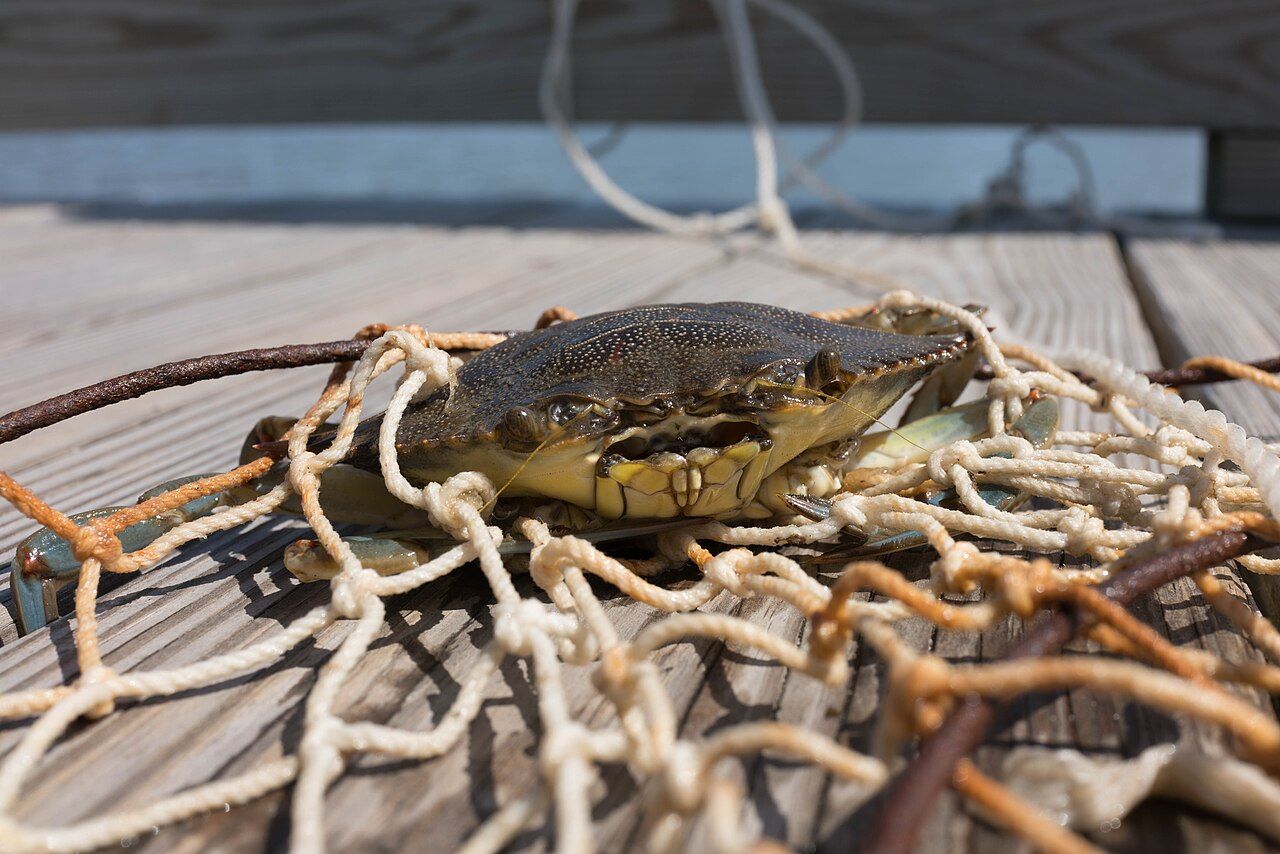
The blue crab's scientific name, Callinectes sapidus, translates roughly as "beautiful savory swimmer," and all three words fit. Its shell is olive brown on top, but the claws carry the bright blue that gives the crab its name, and mature females have red tips on their pincers. The last pair of legs is flattened into paddles, so the crab can swim quickly sideways through the water rather than only scuttling along the bottom.
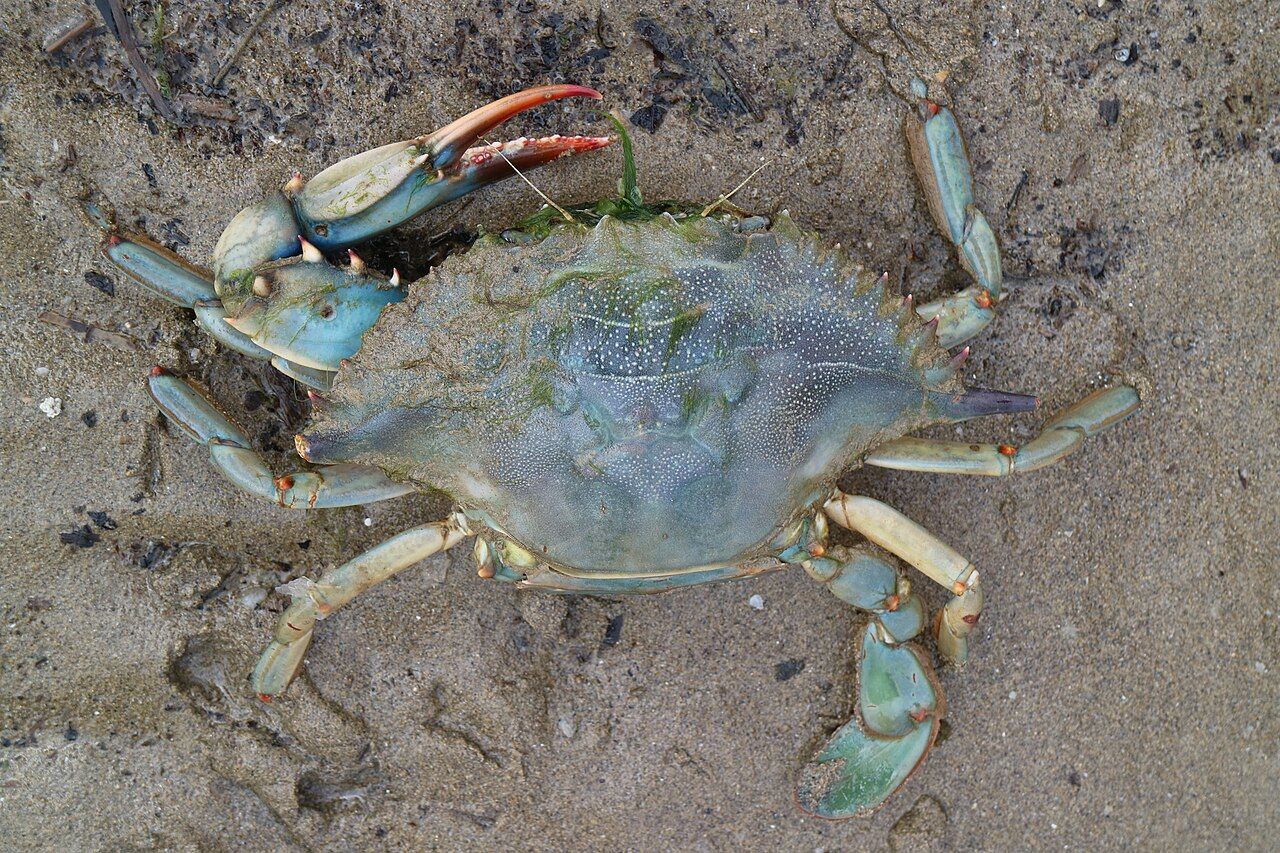
Telling males from females is the first thing any crabber learns, because the rules treat them differently. Turn a crab over and look at the apron, the flap on its underside. A male, called a jimmy, has a long, narrow apron shaped like a slender monument. A mature female, called a sook, has a broad, rounded apron, often compared to the dome of the Capitol. Immature females have a triangular apron. Sooks carrying a spongy orange egg mass under the apron are known as sponge crabs, and they are protected.
A crab's year in the bay
Blue crabs are creatures of the whole bay. Females mate in the brackish upper and middle bay, then travel south toward the saltier water near the mouth of the Chesapeake to release their eggs. The larvae drift out into the ocean, develop at sea, and young crabs ride currents back into the bay to grow up in the grass beds and shallows. Males tend to stay in the less salty rivers and creeks, which is why the Eastern Shore's tributaries are full of heavy jimmies by late summer.
A crab grows by molting. It backs out of its old shell, swells with water, and for a few hours is soft enough to eat whole: that is a soft-shell crab. A crab about to molt is called a peeler, and watermen hold peelers in shallow tanks so they can catch the moment. Soft-shells are a late-spring and early-summer specialty when the first big molt of the year comes through.
When the water turns cold in late autumn, crabs bury themselves in the mud on the bottom and go dormant for the winter. Each winter, scientists dredge sites across the bay to count those buried crabs, and the result helps set the following year's harvest rules. That is why you will hear people on the Shore talk about "the survey" in spring the way farmers talk about rain.
How crabbing works
Commercial crabbing on the bay mostly runs on two kinds of gear. Crab pots are wire cubes with funnels the crab can enter but not easily leave, baited and set in long lines marked by floats, and they are worked in the open bay and larger waters. Trotlines are long baited lines laid along the bottom of the rivers and creeks; the waterman runs a boat slowly along the line, which lifts over a roller, and dips the crabs off as they come up hanging onto the bait. Both are hard, early work. Boats are often out before sunrise and back in by early afternoon, before the heat of the day.
Recreational crabbing is simpler. Many people start with a hand line: a length of string, a weight and a chicken neck, lowered off a dock or pier and pulled up slowly, with a long-handled dip net ready to scoop the crab before it lets go. Others use collapsible traps or run a short trotline from a small boat. Some public piers and parks allow crabbing, and on a summer evening you will see families lined up along the rails.
In general terms, there are minimum sizes that change through the season, daily catch limits, restrictions on keeping females, licenses required for some kinds of gear, and seasons and hours for crabbing. A crab gauge is cheap and saves arguments. Measure each crab point to point across the shell, throw back anything undersized or carrying eggs, and keep your catch alive and cool until you cook it.
Keeping the bay full of crabs
Blue crab numbers swing widely from year to year with weather, water quality, predation and fishing pressure. Some years the bay seems thick with crabs; others the docks are quiet and prices climb. After a steep decline in the early 2000s, Maryland and Virginia tightened their rules, focusing especially on protecting females, since one sook can carry millions of eggs. Since then, the population has gone up and down, and managers adjust the limits as the numbers change.
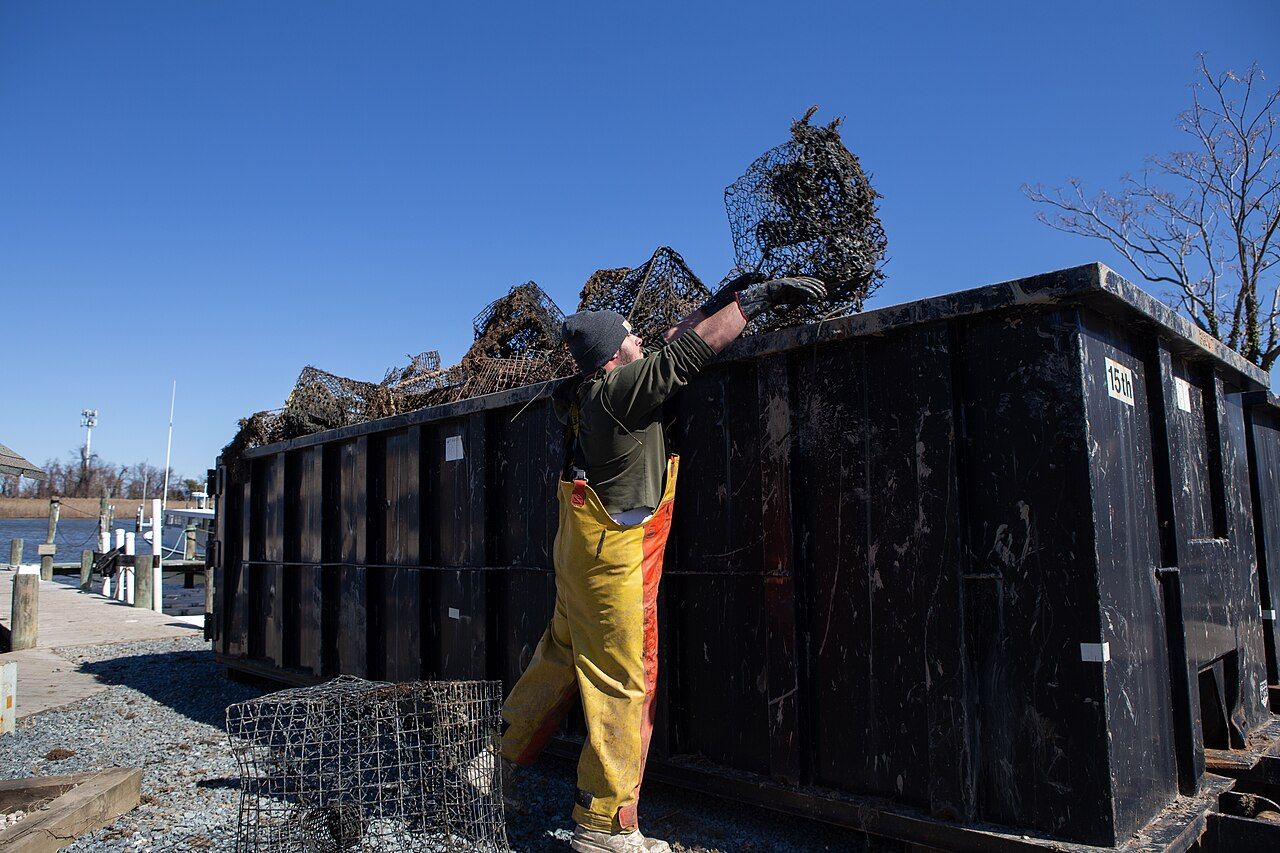
Lost and abandoned crab pots are another concern. A pot on the bottom with no float keeps catching crabs and fish that die inside it. Programs around the bay pull these ghost pots out of the water and recycle the wire. Healthy grass beds, which shelter young crabs, depend on clear water, so the long effort to cut runoff and pollution matters for crabs as much as for the oysters and the watermen.
When you buy crabs or crab meat, it is fair to ask where they came from. Much of the picked meat sold in the United States is imported, and local crab is seasonal. A crab that came out of a nearby river that morning is the whole point of eating crabs here.
Picking a steamed crab
In Maryland, crabs are steamed rather than boiled, over water and a splash of vinegar or beer, with a heavy coat of spicy seasoning. They come to the table bright red-orange, usually piled on brown paper with a wooden mallet and a small knife for each person. Picking is slow, messy and social. Expect to spend an afternoon at it.
- Pull off the legs and claws and set the claws aside. Bite or squeeze the meat out of the swimming legs where they joined the body.
- Turn the crab over and lift the apron with your thumb or knife. Snap it off.
- Pry off the top shell by working your thumb into the gap where the apron was and lifting.
- Scrape away the gills, the feathery grey fingers along each side, and rinse or wipe out the yellow-green "mustard" in the middle if you do not want it. Many people enjoy it.
- Snap the body in half and pick the meat out of each chamber with your fingers or the knife. The large pieces near the back fins are the prize.
- Crack the claws with a light tap of the mallet, or set the knife edge across the claw and tap the knife, then pull the meat out in one piece.
Fall crabs are often the heaviest of the year, full of meat before winter. Crabs are usually sold by the dozen or the bushel and priced by size, and prices move with the season and the catch, so ask before you order. Cold drinks, corn on the cob and sliced tomatoes are the usual company on the table, and a bucket for the shells is essential.
A crab that came out of a nearby river that morning is the whole point of eating crabs here.
Where the crabs come from
Crabbing happens up and down the Shore, but some places live by it more than others. On Tilghman Island, at the end of the road west of St. Michaels, workboats still leave the harbors before dawn. Out on Smith Island, far into the bay, soft-shell crabs have long been a mainstay of island life. Around the harbor towns, you can watch workboats unload in the afternoon and see the floats of pot lines stretching out across the open water.
For the history of the boats and the people who work them, the maritime museum in St. Michaels has exhibits on crabbing and oystering, with workboats you can look over closely. It is the best place on the Shore to understand how much skill goes into a dozen crabs.