
History on the Shore · Wye Mills
Wye Mills and the old oak
At a small crossroads off US 50, a white frame mill still grinds grain beside its pond, and a fenced patch of ground marks where Maryland's most famous tree stood for centuries.
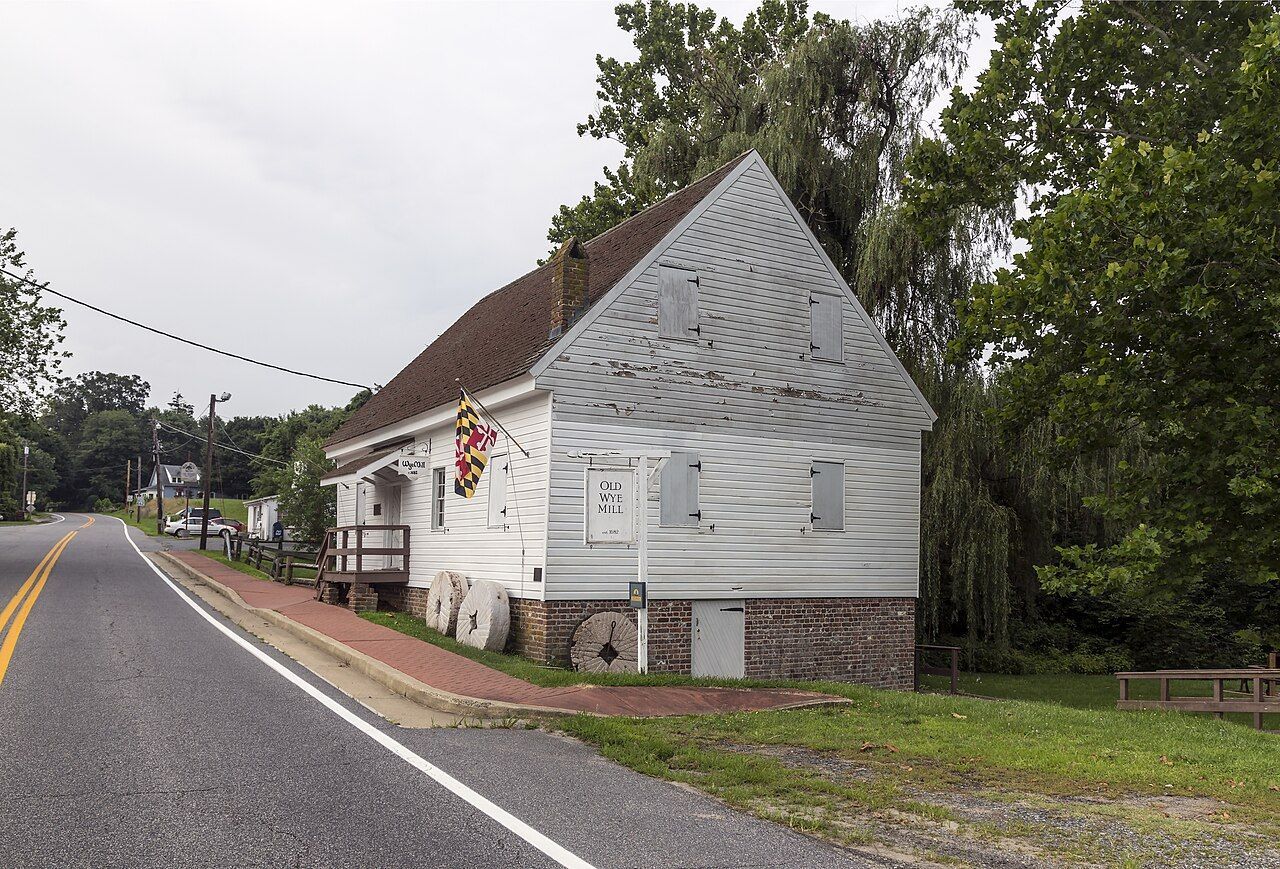
Wye Mills is barely a village: a handful of houses, a small college campus nearby and a crossroads on a back road a short way off US 50. Most traffic to the beaches roars past without stopping. Yet in the space of a few hundred yards it holds two of the most storied landmarks on the Eastern Shore: a working gristmill with roots in the seventeenth century, and the site of the Wye Oak, once the largest white oak in the United States.
You can see both in an hour. Many people stop on the way to or from Easton or the bay. It is a good place to stretch your legs and to think about how long things last here.
The mill by the pond
A mill has stood at this spot since the late seventeenth century, using the water of a small stream dammed into a millpond. The white frame building you see today, set on a brick foundation beside the road, dates in part from the colonial era and has been repaired and rebuilt many times since. It is often described as one of the oldest working frame gristmills in the country.
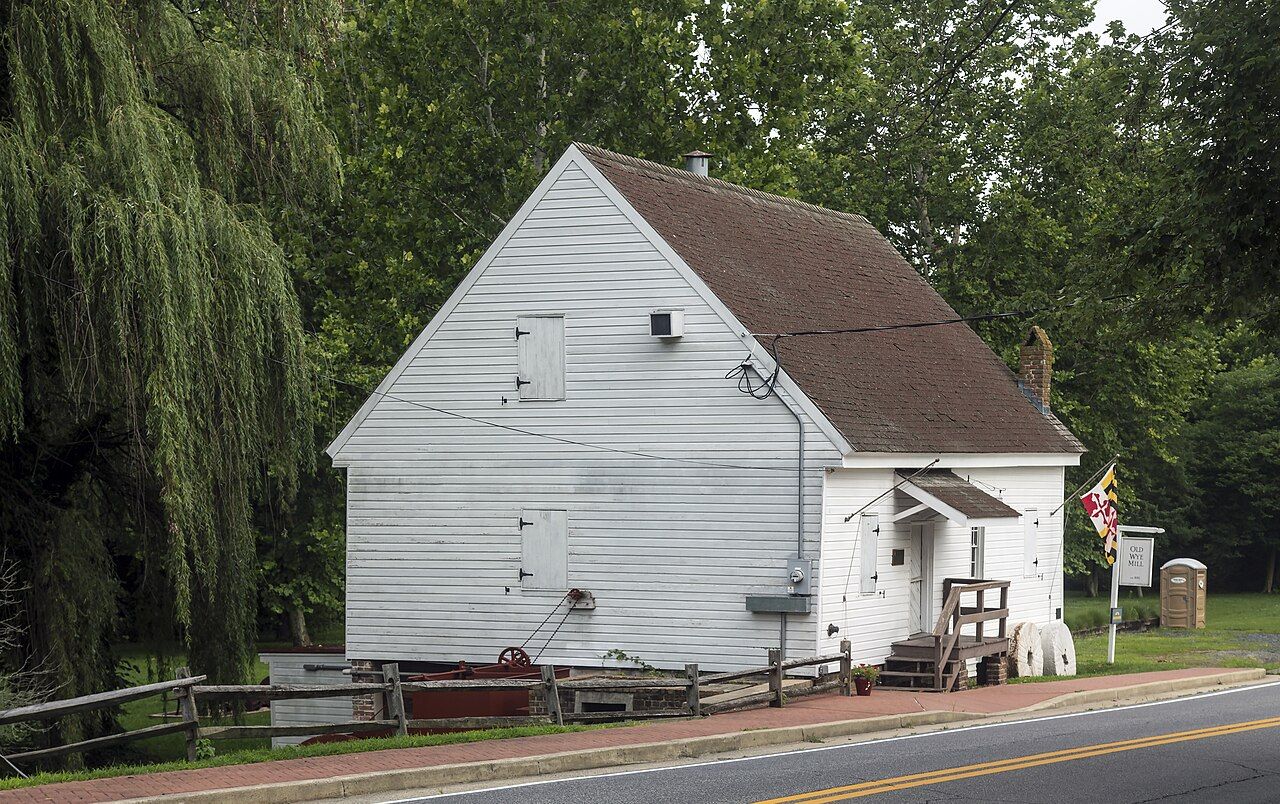
The mill is linked by tradition to the Revolutionary War. Flour ground here is said to have gone to supply the Continental Army, including during the hard winter at Valley Forge. Like many such stories, it is told in general terms rather than documented in detail, but it reflects the real importance of mills like this one to the region's farms and to the war effort.
Mills were the industrial heart of the colonial Shore. Farmers brought wheat and corn by cart and boat, and the mill turned them into flour and meal for local use and for export. Every creek of any size had one. Most have vanished. Wye Mill survived because people kept it running and, later, because preservation groups took it on.
Watching it work
The mill is operated today as a historic site by volunteers. On grinding days, water from the pond turns the wheel and the old millstones grind grain in the way they have for centuries. Inside, the gears, shafts and chutes show how a single stream could power the whole building. Stone-ground meal and flour are sometimes available, and donations help keep the place open.
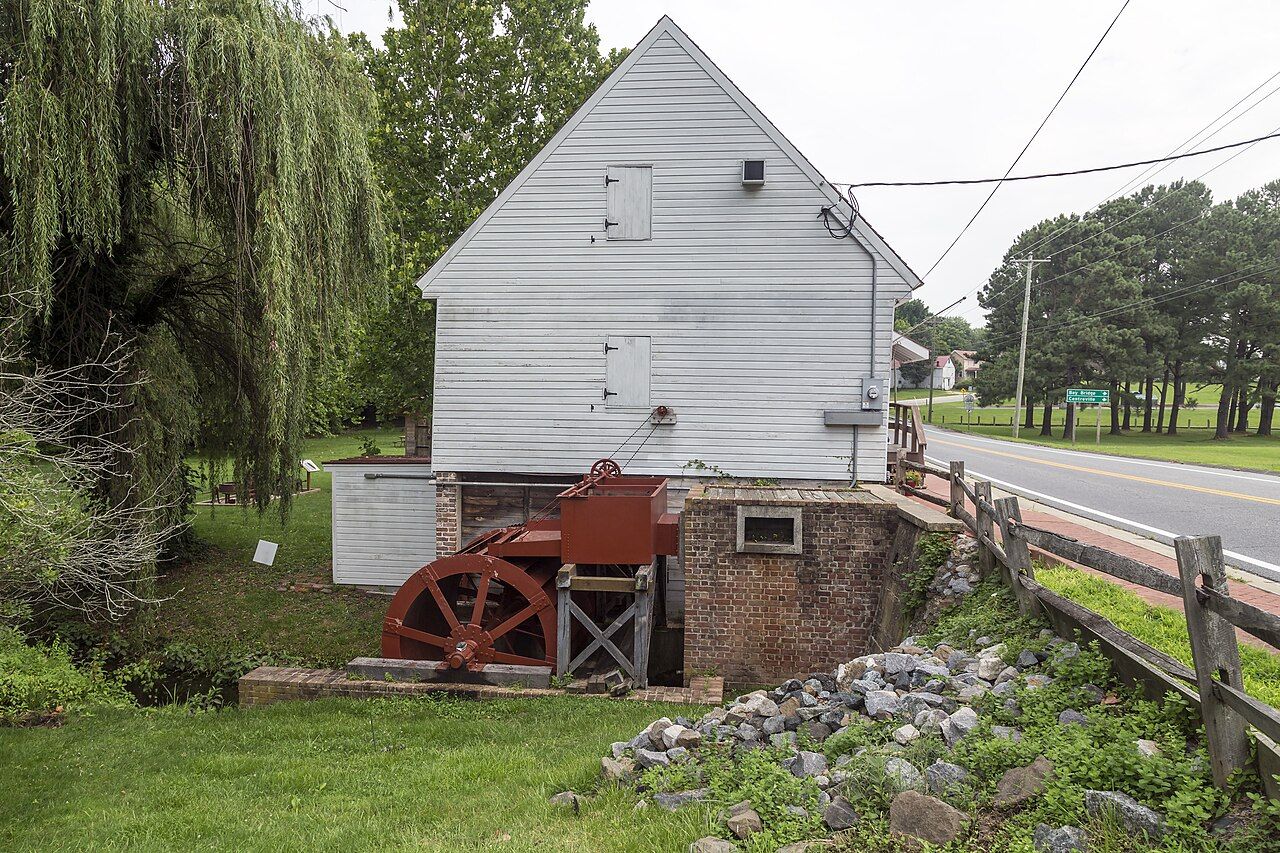
Opening days are limited and seasonal, and grinding demonstrations happen only on some of them. Even when it is closed, you can see the exterior, the waterwheel and the millpond from public ground beside the road.
Also enteredThird Haven Meeting House, three centuries of quietThe Wye Oak
A short walk up the road, stood the Wye Oak, in a park created to protect it. It was a white oak, the state tree, and for decades it was the largest of its kind in the country. It was estimated to be more than four centuries old, which would mean it was already a sizable tree when the first English settlers reached the Shore.
Its trunk was huge, its lower limbs reached far across the lawn, and its crown was broad enough to shade much of the park. The state acquired the tree and the land around it in 1939, and it became a symbol of Maryland. People came from all over to see it.
On a June night in 2002, a severe thunderstorm brought the Wye Oak down. By then it was old and weakened, and the storm broke it apart. The loss was felt across the state. Wood from the tree was saved and used for a number of commemorative objects.
The clone in the park
The story did not end there. Before the tree fell, cuttings had been taken and grown into young trees genetically identical to the original. After the storm, the stump was cleared and one of these clones was planted on the site. It is still young, but it is growing well among the remains of the old tree's roots.
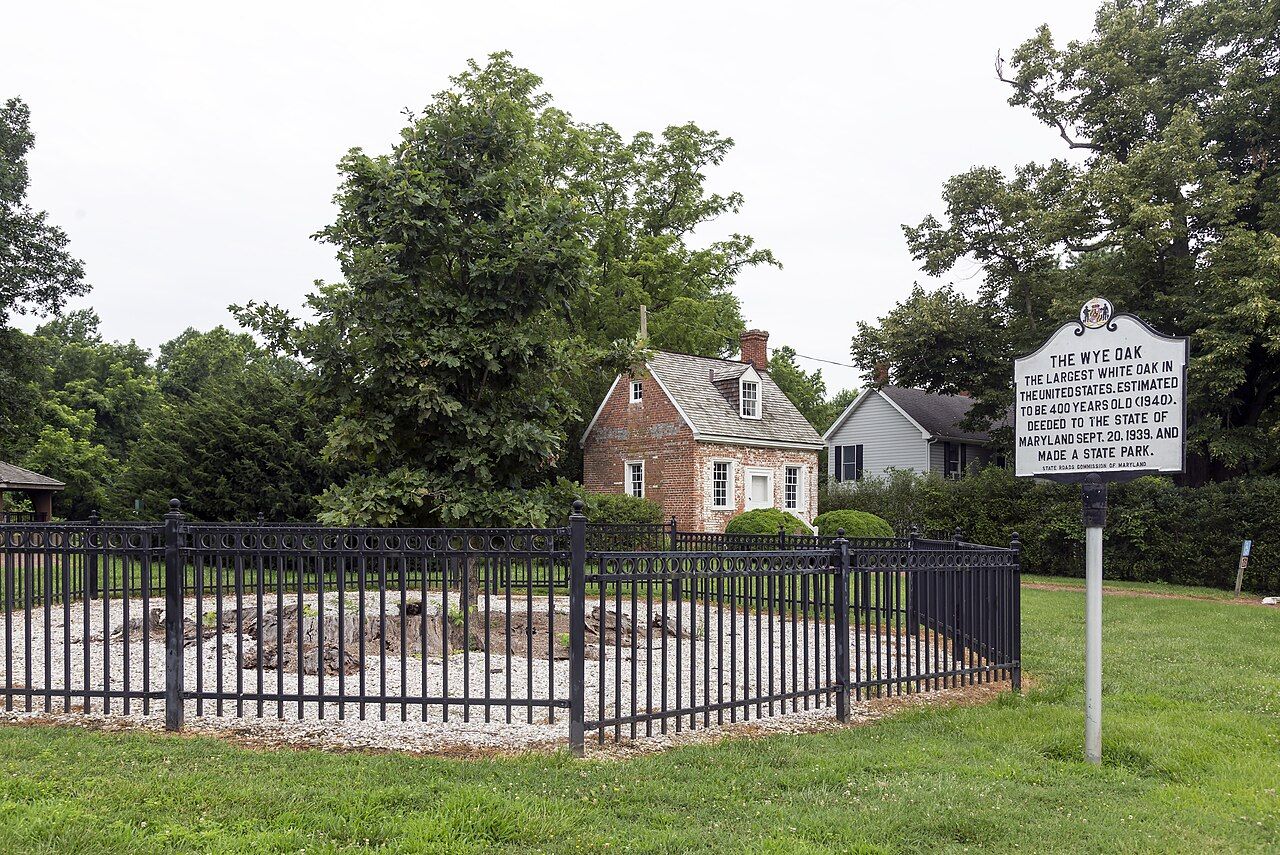
A historical marker stands beside the fenced area, describing the original tree. Standing beside the young clone, you get an odd sense of time: this sapling carries the same genes as a tree that was already old when the colony was founded. Given luck, it could still be standing centuries from now.
More history nearby
Wye Mills sits close to some of the oldest places in the region. A short drive away is Old Wye Church, an Anglican church built in the early eighteenth century and restored in the twentieth. In Easton, the Third Haven Meeting House is one of the oldest frame meeting houses in America, dating from the 1680s, built not long after the first mill on this stream.
The Wye River itself, a few miles downstream, was the setting for part of Frederick Douglass's childhood on the Lloyd plantation, told in our guide to Frederick Douglass's Talbot County. It is a quiet, beautiful river, and it is worth seeing from a public landing with that history in mind.
- Wye Mills is on MD 662, a short drive off US 50 between Easton and Queen Anne's County.
- Parking is limited and roadside. Watch for traffic on the narrow road.
- The mill's opening days are seasonal and limited.
- Combine the stop with Easton, about twenty minutes south, or with the farm roads toward Tuckahoe State Park.