
Easton · Easton
Easton's historic streets, block by block
Talbot County's seat grew up around a courthouse, and the old grid still reads like a history lesson in brick: Federal fronts, Victorian porches and a square where the county still does its business.
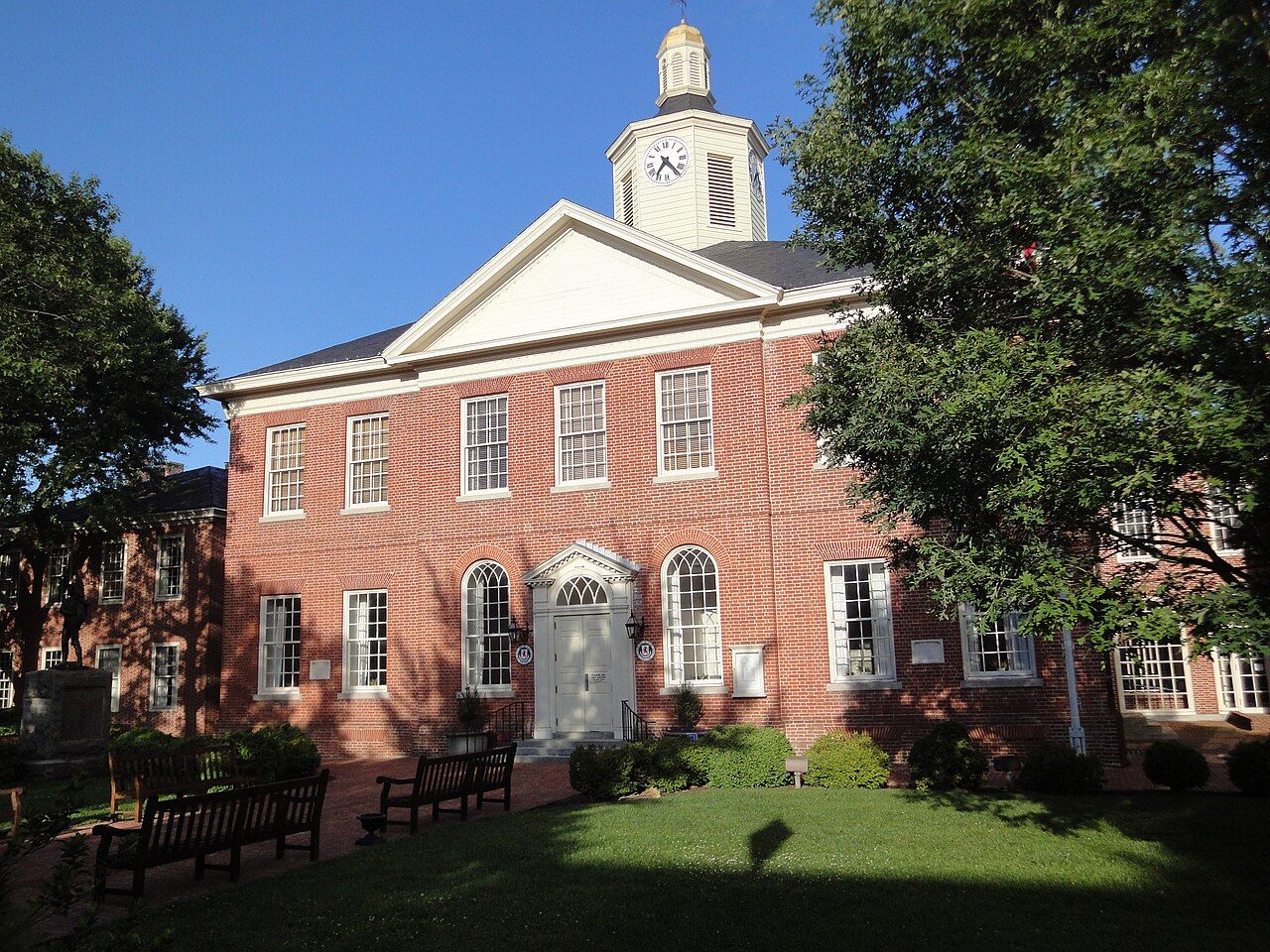
Easton is the place the rest of Talbot County comes to do its paperwork, and it has been for more than three centuries. Deeds, wills, court cases and tax bills have passed through the same few blocks since the colonial era, and the town that grew around them is one of the best preserved small county seats on the Eastern Shore. You can see most of it on foot in a morning, and a slow afternoon will show you a good deal more.
The historic district is not a museum piece. People live above the shops, lawyers cross the square with files under their arms, and on market days the streets fill with farm trucks. That ordinary use is part of what makes the place worth walking: the old buildings are still doing their jobs.
A town that grew around a courthouse
Talbot County was organized in the seventeenth century, and for its first decades the county's business moved around the waterfront plantations that held most of the population. Early in the eighteenth century the county chose a site at the head of the Tred Avon River for a permanent court, and a small settlement grew up beside it. For years it was known simply as Talbot Court House. The name Easton came later in the eighteenth century, around the time the young state of Maryland was settling into its new shape.
The Quakers were here first in a more lasting way. Their meeting house on the south edge of town dates from the 1680s and predates the courthouse settlement altogether. If you have time for one more stop beyond the square, walk down to the old Quaker meeting house and its quiet grounds.
Easton's position helped it. Roads from the river landings, the farms of the upper county and the ferry crossings all converged here, and the town became the market and legal center for the middle Shore. Banks, newspapers, churches and lawyers' rows followed. The railroad's arrival in the nineteenth century tied the town more firmly to Baltimore and the cities beyond, and brought the money that paid for many of the Victorian houses you see today.
The courthouse square
Start where the town started. The Talbot County Courthouse stands on its green between Washington and Dover streets, a brick building whose core went up in the 1790s and which has been enlarged and altered since. The white cupola and clock are the landmark you will use to find your way back all day.
The lawn is worth slowing down for. A statue of Frederick Douglass, unveiled in 2011, stands on the courthouse grounds. Douglass was born enslaved in Talbot County around 1818, escaped in 1838, and returned to the county as a free man and a national figure decades later. He spoke at this courthouse on one of those return visits. The statue faces a town that once held people in bondage and sold them, and it is the right place to begin understanding the county's history. The story of his early life on the Tuckahoe and the Wye is told in more depth in our guide to Frederick Douglass's Talbot County.
Benches circle the green, and the shade of the old trees makes the square a good place to sit with a map and plan the rest of the walk.
The statue faces a town that once held people in bondage and sold them, and it is the right place to begin understanding the county's history.
Washington Street and the old commercial blocks
Washington Street is the spine of the district. North and south of the courthouse it runs past rows of two and three storey brick commercial buildings, most of them from the nineteenth and early twentieth centuries, with shopfronts below and offices or apartments above. Look up from the sidewalk: the cornices, window hoods and painted brick tell you more about the town's prosperous decades than the ground floors, which have been remodelled many times.
Dover Street and Harrison Street carry on the pattern. On Dover you pass a restored early twentieth century theater, still used for concerts and films, and on Harrison the Academy Art Museum, which holds a permanent collection and changing exhibitions in a building that began life as a school. The Talbot Historical Society keeps a small museum and several historic houses close to the square; its gardens are a pleasant detour on a warm day.
Also enteredThird Haven Meeting House, three centuries of quietGoldsborough Street, running east from Washington, has some of the town's larger churches and older houses, and the side streets between Goldsborough and the courthouse are where the residential district really begins.
Federal and Victorian houses
Easton's housing stock reads in layers. The oldest surviving town houses, from the late eighteenth and early nineteenth centuries, are mostly Federal: brick, symmetrical, with fanlights over the doors, low-pitched roofs and fine but restrained detail. Several of the best stand on South Washington Street and the blocks around it. A few frame houses of the same period survive among them, their clapboards painted white or soft colors.
After the Civil War, and especially after the railroad came, the town spread outward and its taste changed. Walk the streets east and north of the center and you find Italianate houses with bracketed eaves, Queen Anne houses with towers and wraparound porches, and later Colonial Revival houses that borrowed from the Federal buildings downtown. Many are private homes, so admire them from the sidewalk.
What to look for
- Fanlights and sidelights around front doors on the Federal houses.
- Flemish bond brickwork, with alternating long and short brick faces, on the older buildings.
- Decorative brackets under the eaves of the Italianate houses.
- Porches, towers and patterned shingles on the late Victorian streets.
- Old carriage blocks and iron boot scrapers at the curb.
A walk, and what comes after it
A loop of a couple of miles covers the core of the district comfortably. One good order runs like this:
- Begin at the courthouse square and read the Douglass statue's inscriptions.
- Walk north on Washington Street past the commercial blocks, then turn onto Dover Street and Harrison Street for the theater and the art museum.
- Head back toward the square on Goldsborough Street, with its churches and older houses.
- Continue south on Washington Street past the Federal houses to the Third Haven Meeting House grounds.
- Return through the residential side streets east of Washington, looking at the Victorian houses on the way.
Easton is also a good base for the rest of the county. The Tred Avon runs a few minutes west of town, and the roads out to the river towns are short, flat and well signed. Many visitors pair a morning in the district with an afternoon drive or ride to St. Michaels or Oxford, and cyclists will find the county's quiet back roads described in cycling the flat Shore.
Spring and autumn are the easiest seasons for walking, with mild days and the gardens at their best. In November the town fills for the long-running waterfowl festival, when exhibitions spill into buildings across downtown and parking becomes scarce. Summer brings heat and humidity, so start early, keep to the shady residential streets in the afternoon, and leave time to sit on the courthouse green as the evening cools.
Check museum and gallery opening days before you go, since they change through the year, and allow time simply to wander: Easton rewards people who turn down the street they had not planned to.