
Easton · Easton
Third Haven Meeting House, three centuries of quiet
On the south edge of Easton, a plain wooden meeting house from the 1680s still stands among old trees, one of the oldest frame houses of worship in the country and still used by Friends.
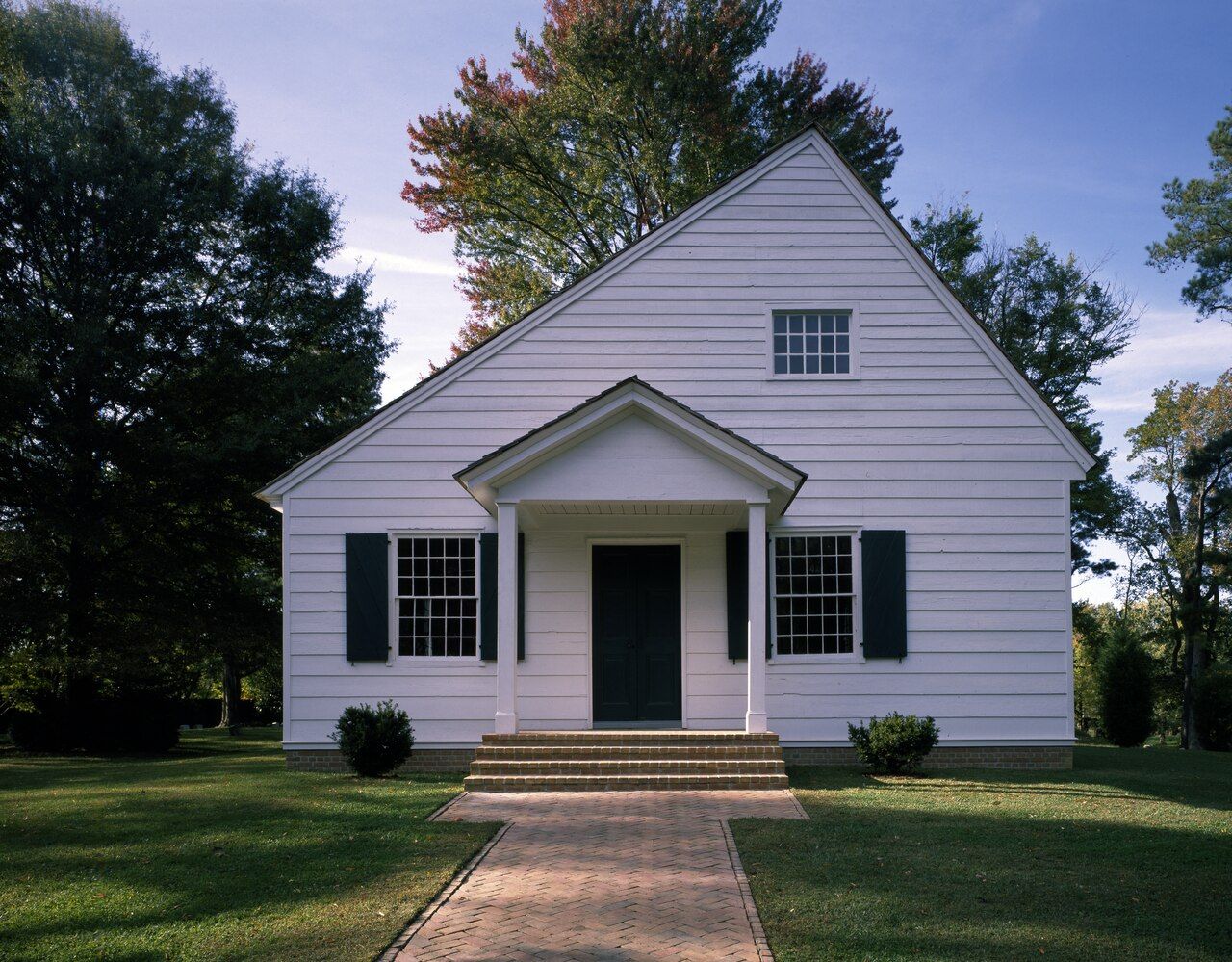
Walk south along Washington Street from the courthouse in Easton and the town thins into lawns and old trees. Set back from the road is a long, low wooden building with a steep shingled roof and simple shutters. It looks like a large farmhouse, or a barn made tidy. It is Third Haven Meeting House, built by the Quakers of Talbot County in the 1680s, and it is one of the oldest frame buildings used for worship anywhere in the United States.
There is no steeple, no stained glass and no altar. The building was made for silence, and it still is. Friends continue to meet here, which makes a visit something different from a stop at a historic site: you are a guest at a place that is still in use.
Quakers on the Eastern Shore
The Religious Society of Friends reached the Eastern Shore in the seventeenth century, when Maryland's relative tolerance drew dissenters who were unwelcome elsewhere. Talbot County, with its scattered tobacco plantations and its many creeks, became one of the strongest centers of Quaker life in the colony. Members traveled to meeting by boat and on horseback from farms along the Tred Avon, the Choptank and the Wye.
The name Third Haven is thought to be a version of Tred Avon, the river at whose head Easton grew. The Friends chose this site on the edge of what was then open country, and the meeting house came before the town: the courthouse settlement that became Easton grew up nearby only in the following century. The relationship between the two is a theme in any walk through Easton's historic streets, where the meeting house is the oldest building in the story.
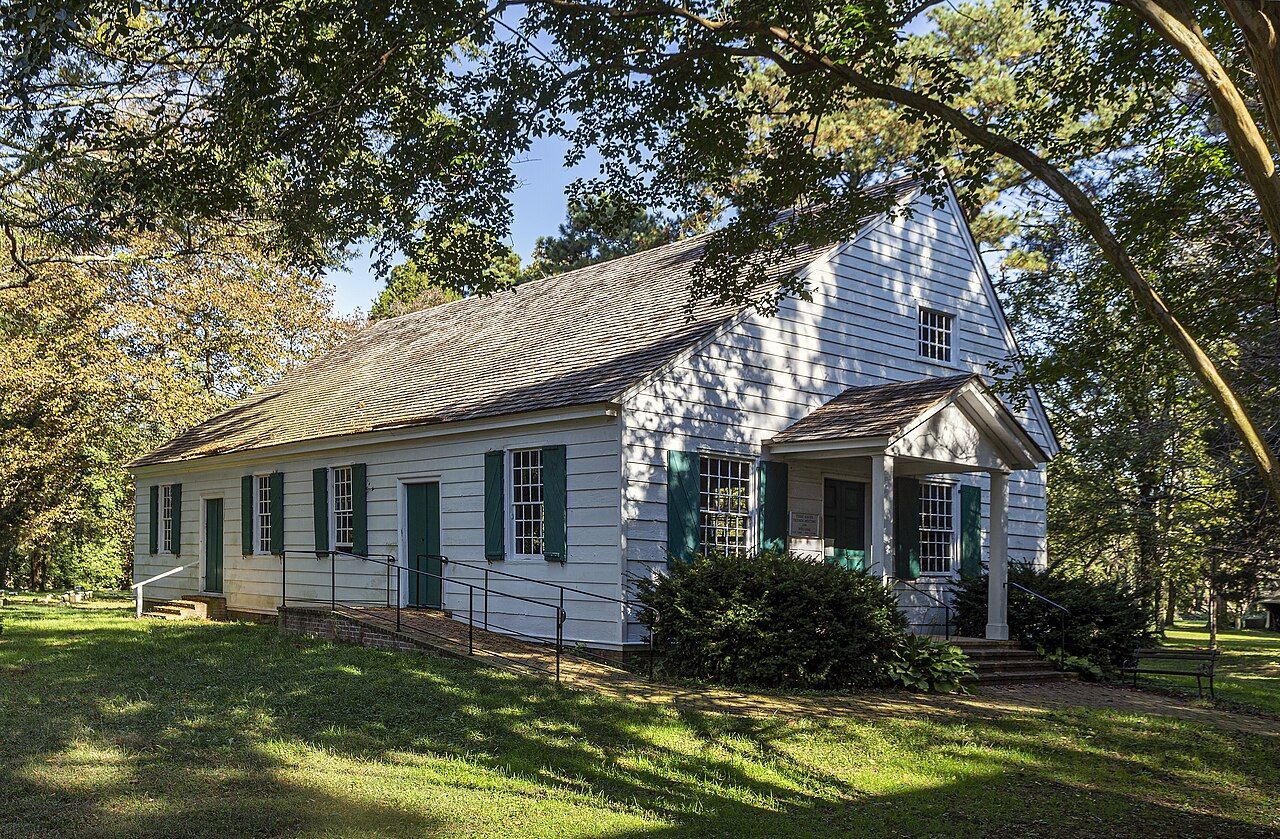
The old meeting house
The building went up in the early 1680s, with work recorded as complete by 1684, and was enlarged within a few decades as the meeting grew. Its frame is heavy timber, its walls are clapboard, and its roof is broad and steep. The design is deliberately plain. Friends believed that worship needed no priest and no ceremony, only people gathered in expectant silence, and the room reflects that.
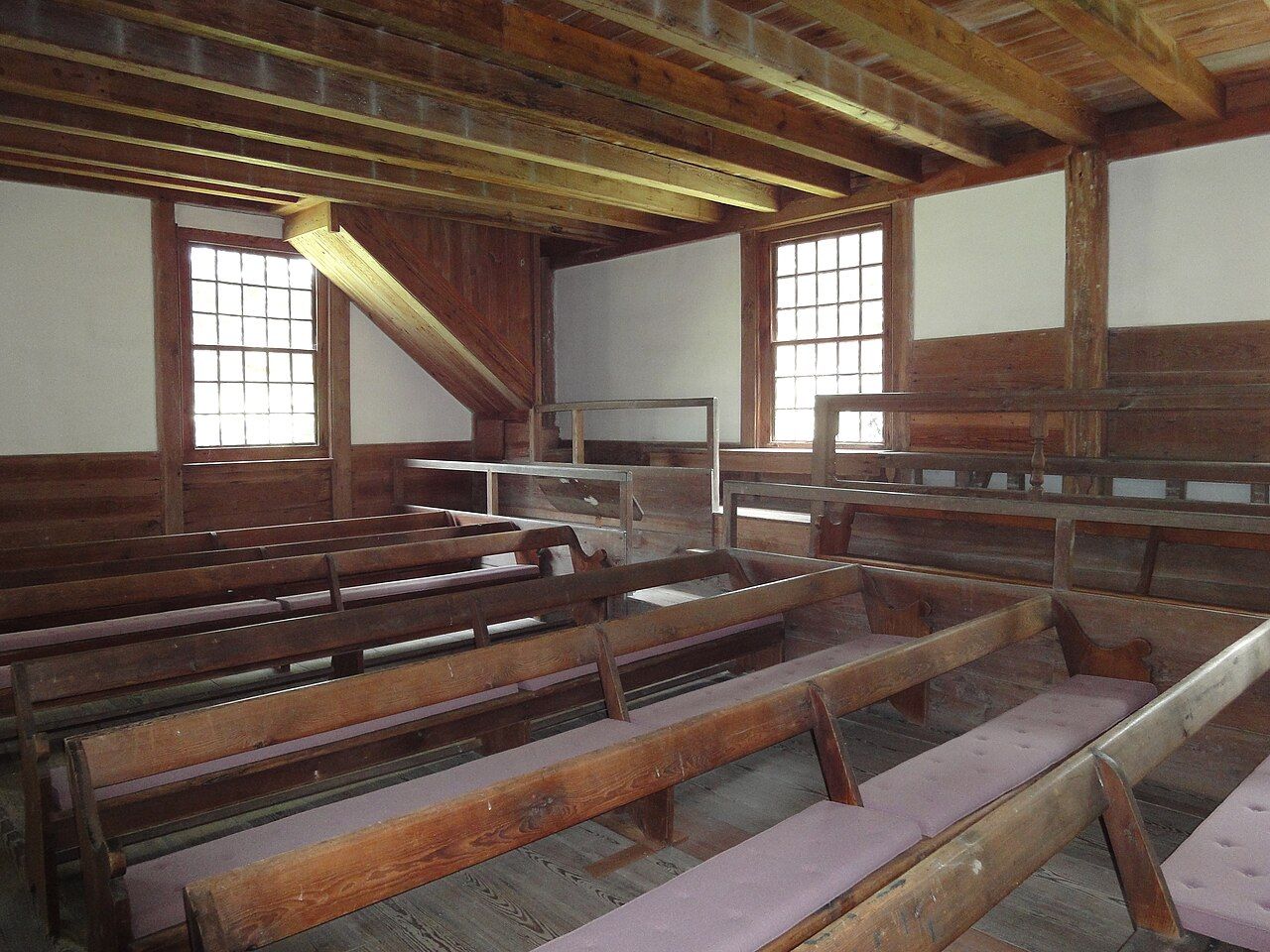
Inside, rows of simple wooden benches face one another. Exposed beams cross the ceiling, and tall windows light the room from both sides. A raised bench along one wall was where respected members, often called elders, sat. A gallery and movable partitions once allowed men's and women's business meetings to be held separately, a common arrangement in early Quaker houses.
Tradition holds that William Penn attended a meeting here around 1700, during one of his visits to America. The story is old and often repeated, though details of such visits are hard to confirm, so treat it as part of the house's lore.
Also enteredEaston's historic streets, block by blockThe brick meeting house and the grounds
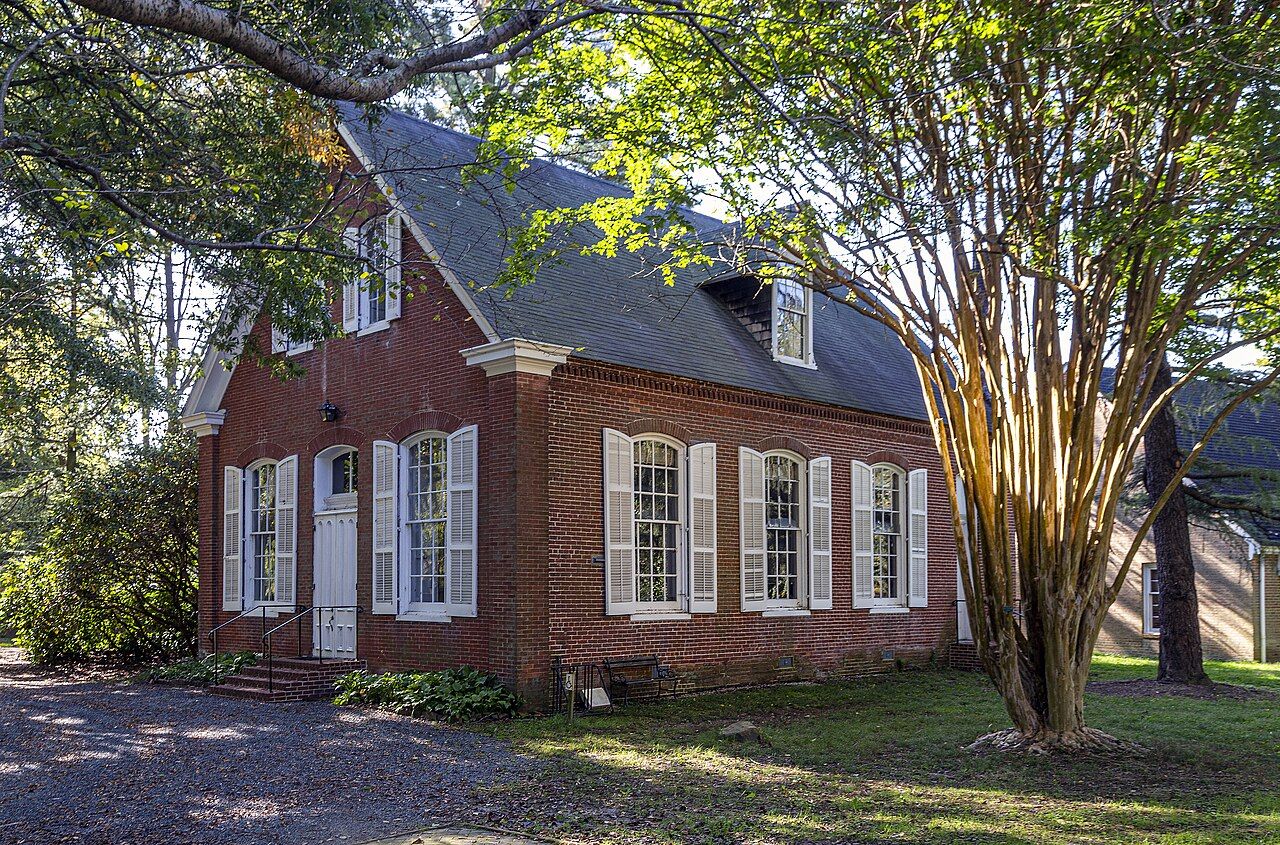
By the nineteenth century the old building was cold, drafty and hard to heat, and in 1880 the meeting built a smaller brick meeting house nearby. It is a handsome building in its own right, with arched windows and shutters, and it is where regular meetings have usually been held since. The two buildings together tell the story of a community that kept its first house rather than replacing it.
Around them lies a large wooded lot with a burial ground. Early Friends discouraged elaborate monuments, so many of the stones are small, plain and uniform, and some graves are unmarked. Walk here slowly. The ground is uneven, the trees are old and wide, and on a weekday the loudest sound is often the wind.
Friends, slavery and freedom in Talbot
Talbot's Quakers lived in a slaveholding county, and some early members held enslaved people themselves. Over the eighteenth century Friends' meetings in Maryland moved toward requiring members to free those they held, and by the later part of the century slaveholding had become grounds for disownment from the meeting. Many Talbot Friends freed enslaved people in that period, and the county's Quaker families appear in later records as people who helped those seeking freedom.
It is an uneven history rather than a simple one, and the meeting house is a good place to reflect on it. A short drive away, the stories of people born into slavery in Talbot and Dorchester counties are told at length; see our guide to Frederick Douglass's Talbot County, and further south the landscape along the Harriet Tubman byway.
Visiting quietly
The grounds are generally open for a respectful walk, but the old meeting house is not always unlocked, and access to the interior is often arranged in advance or offered on particular open days.
A few courtesies
- Keep voices low near the buildings, especially if cars are parked and a meeting may be under way.
- Visitors are usually welcome at meeting for worship; sit quietly, and know that silence may last most of the hour.
- Do not climb on fences, benches or gravestones.
- Photograph the buildings from outside, and ask before photographing anyone.
Spring and early autumn are the best times to come, when the trees are in leaf and the light falls softly through them onto the white walls. Combine the visit with a walk back through town, or carry on to the river towns west of Easton. Either way, give the place a little time. It has been here more than three hundred years; a half hour of quiet is a fair exchange.