
History on the Shore · Talbot County
Frederick Douglass's Talbot County
The most influential American abolitionist was born enslaved beside a quiet creek in Talbot County. The places that shaped him are still here, most of them unmarked fields, waters and back roads.
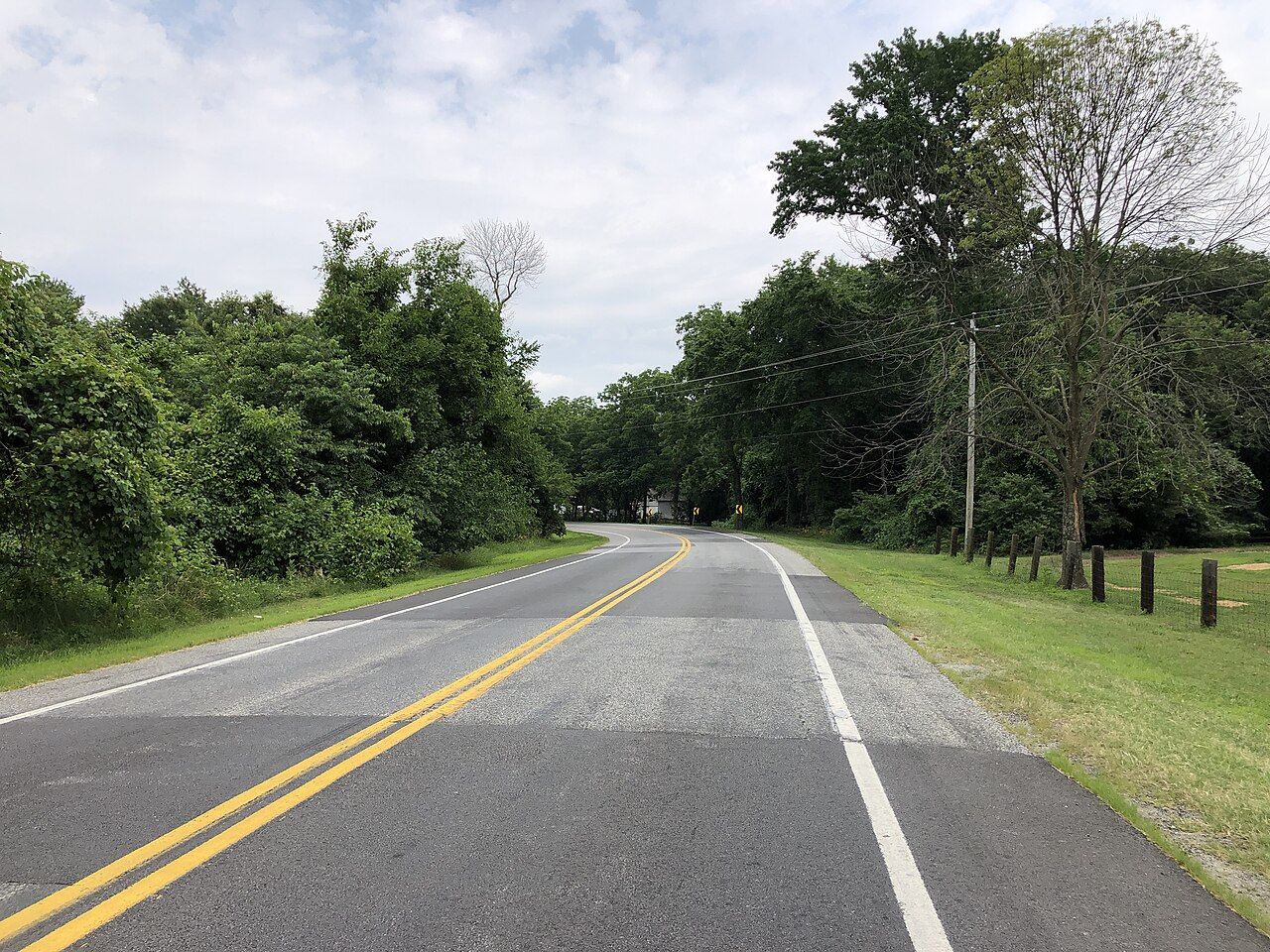
Frederick Douglass spent the first twenty years of his life enslaved, and nearly all of the places that shaped those years lie in Talbot County. He was born beside Tuckahoe Creek, raised for a time on one of the largest plantations on the Eastern Shore, sent back and forth to Baltimore, hired out to farms near St. Michaels and jailed in Easton. He escaped in 1838 and became the most powerful voice against slavery in the country. Decades later he came home to the county as a free man.
Following his story here is not like visiting a museum. Most of the sites are private farmland, quiet roads and water. What you find is landscape: the flat fields, the slow creeks and the distances he described. It helps to read his own account before you come, because he wrote about this country with great precision, and you will recognize it.
Born on the Tuckahoe
Douglass was born Frederick Augustus Washington Bailey, probably in February 1818. He never knew the exact date, a fact he described as one of the small cruelties of slavery: enslaved children were kept ignorant of their birthdays, while the children of the enslavers knew theirs. He later chose February 14 to mark it.
His birthplace was on a farm near Tuckahoe Creek, in the northeast corner of the county close to the Caroline County line. His mother, Harriet Bailey, was hired out to work elsewhere and could visit him only a few times, walking long distances at night. She died when he was about seven. He was raised in his early years by his grandmother, Betsey Bailey, in a cabin near the creek, and he remembered that time with warmth: the woods, the creek, the freedom a small child had before he understood what he was.
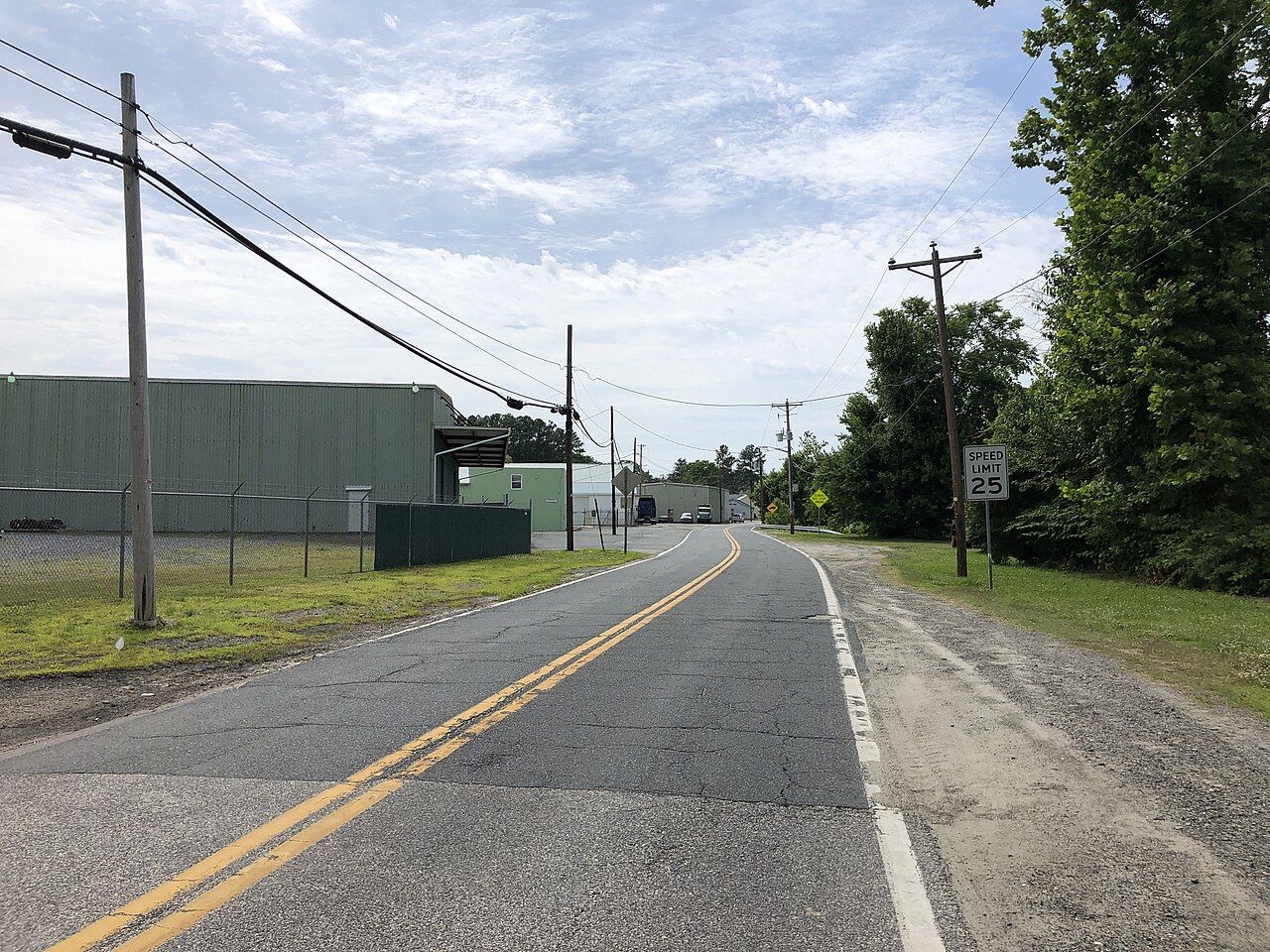
The country around the Tuckahoe today is still farmland and woodland, with small crossroads and narrow bridges. You can drive the roads near the creek and see the kind of ground he knew, but there is no birthplace house to visit, and the land is private. A roadside historical marker in the area notes the connection. The creek itself is easier to reach upstream, where Tuckahoe State Park protects woods and water along the same stream.
The plantation on the Wye
When he was about six, his grandmother walked him to the home plantation of the Lloyd family on the Wye River, where his owner, Aaron Anthony, managed the Lloyd estates. She left him there without warning. It was, he wrote, his first real knowledge of what slavery meant.
The Lloyd plantation, known as Wye House, was one of the great estates of the region, with many enslaved workers and outlying farms. Douglass described its hunger, cold and violence in detail, and the whippings he witnessed there stayed with him for life. In recent years archaeologists have studied the grounds and the quarters where enslaved people lived, adding to what his writing records.
Wye House is still privately owned and is not open to the public. Do not drive onto private lanes looking for it. The point of knowing about it is to read the landscape around the Wye River with his account in mind: the wide, calm water, the old fields and the long distances between places.
The point of knowing about it is to read the landscape around the Wye River with his account in mind: the wide, calm water, the old fields and the long distances between places.
Baltimore, St. Michaels and Easton
Around 1826 Douglass was sent to Baltimore to live with Hugh Auld's household. There he began to learn to read, at first with help from Sophia Auld and then, after her husband forbade it, on his own, trading bread with white boys in the streets for lessons. Literacy changed everything for him.
Also enteredThe Harriet Tubman Underground Railroad bywayIn 1833 he was sent back to Talbot County, to the household of Thomas Auld in St. Michaels. The harbor town you visit today on the Miles River is the same place, and the years he spent around it were among the hardest of his life. In 1834 he was hired out to a farmer with a reputation for breaking enslaved workers, and the beatings he endured ended only when he fought back. He later wrote that the fight was a turning point, and that he was never fully a slave again in spirit. The town's history is told more fully in our guide to St. Michaels on the Miles River.
In 1836, while hired to another farm in the area, he and several others planned an escape. The plan was discovered, and he was taken to the jail in Easton. Released, he was sent back to Baltimore, where he worked in the shipyards. In September 1838, carrying borrowed papers, he escaped by train and boat to New York.
The statue at the courthouse
The place to stand with his story is the lawn of the Talbot County Courthouse on Washington Street in Easton. A bronze statue of Douglass, unveiled in 2011, stands there. He is shown mid-speech, one hand raised, on the grounds of the courthouse where he spoke on a visit after the Civil War.
The setting matters. The same courthouse lawn was long used for public business that included the sale of enslaved people, and for decades it also held a monument to the county's Confederate soldiers, which was removed in 2022. Seeing Douglass there now, in the center of the county seat, is a measure of how much has changed and how long it took. You can walk from the statue through the rest of the town in our guide to Easton's historic streets.
His return
After his escape, Douglass published his first autobiography in 1845, naming people and places in Talbot County. Because that exposed him to recapture, he left for Britain, where supporters raised money to buy his freedom. He spent the following decades as a speaker, editor, adviser to presidents and federal official.
In 1877 he came back to St. Michaels and visited Thomas Auld, who was then old and dying. The meeting was quiet and has been written about ever since. In the years that followed he returned to Talbot County more than once, including a visit to the Lloyd plantation, where he was received by descendants of the family that had owned him. He also spoke in Easton. These returns were not reconciliations with slavery but acts of witness: a free man walking through the places that had held him.
Following the story today
- Start at the courthouse statue in Easton and read the inscriptions.
- Drive to St. Michaels and walk the old streets near the harbor.
- Head northeast toward the Tuckahoe and the farm country of his childhood, keeping to public roads.
- Finish at the creek in the state park, where you can walk or paddle on public land.
Take his writing with you. His first autobiography is short enough to read in an evening, and his later books add detail about his returns. The landscape will mean more with his words in your head.
His story also connects to the wider history of enslavement and escape on the Shore. Further south, in Dorchester County, the landscape of the Harriet Tubman Underground Railroad byway tells a parallel story of a woman born a few years after him and only a short distance away.