
River towns · St. Michaels
St. Michaels, a harbor town on the Miles River
A small shipbuilding town on a deep harbor off the Miles River, St. Michaels holds the Shore's great maritime museum, a screwpile lighthouse, a War of 1812 story and streets of old frame houses.
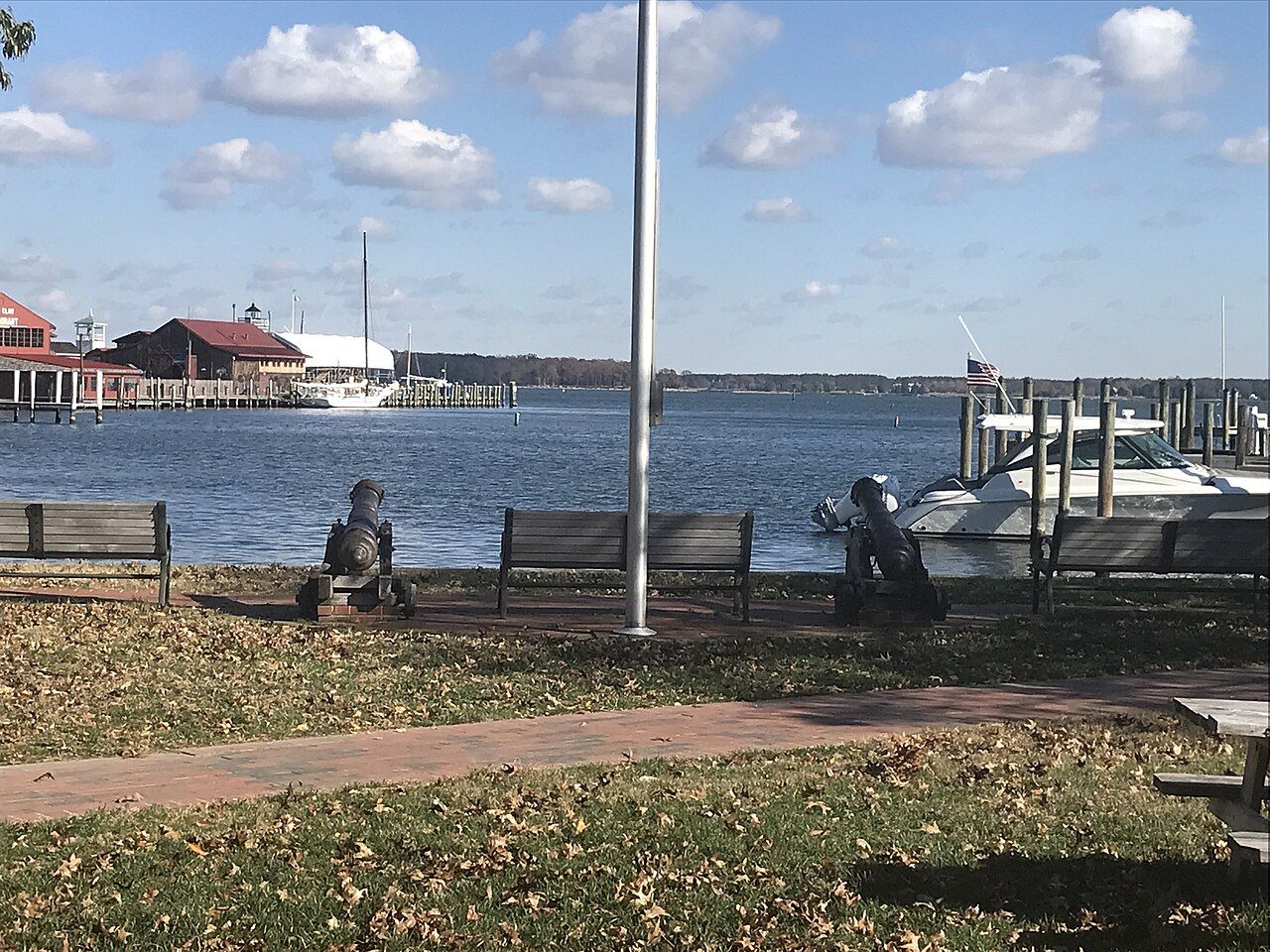
St. Michaels sits on a sheltered harbor where a creek opens into the Miles River, a wide tidal arm of the Chesapeake west of Easton. For two centuries and more the town built boats, worked the water and shipped what the county grew. Today its harbor is lined with masts, its main street is busy with visitors on summer weekends, and its waterfront holds the most important maritime museum on the bay. Underneath the bustle, the old shape of a working river town is still easy to read.
A shipbuilding town
The town takes its name from the Episcopal parish of St. Michael, established here in colonial times, and it grew in the late eighteenth century as a shipbuilding and trading center. Yards along the harbor built fast sailing vessels for the bay and beyond, and the skills of local carpenters and shipwrights were known well outside the county. Later the town built the workboats of the Chesapeake: log canoes, bugeyes and the sailing craft that dredged oysters through the long nineteenth century boom.
Seafood packing, oystering and crabbing kept the town going after the age of big wooden ships ended. The harbor that once served those fleets now fills mostly with pleasure boats, but the watermen's trade has not vanished from this part of the bay. To see where it is still strongest, head farther out the same road to Tilghman Island and the skipjacks.
Frederick Douglass spent part of his youth here, sent in 1833 to live in the household of Thomas Auld in St. Michaels. He later wrote about the town in harsh terms, and those years were among the hardest of his enslavement, leading to his time with a notorious slave breaker on a nearby farm. His life in the county is traced in our guide to Frederick Douglass's Talbot County.
The Chesapeake Bay Maritime Museum
The museum occupies Navy Point, a peninsula on the harbor that once held packing houses and boatyards. Its campus is spread across a cluster of buildings and waterfront docks, and it is worth several hours. Exhibits cover the bay's boats and boatbuilding, oystering, crabbing, waterfowl hunting, steamboats and the communities that lived from the water.
The museum keeps one of the largest collections of historic Chesapeake Bay boats anywhere, and a working boatyard where shipwrights restore traditional vessels. Some of those boats sail or take visitors out in season. Watching a log canoe being rebuilt, or a skipjack hauled out for repairs, explains the bay's maritime history better than any label.
Hooper Strait Lighthouse
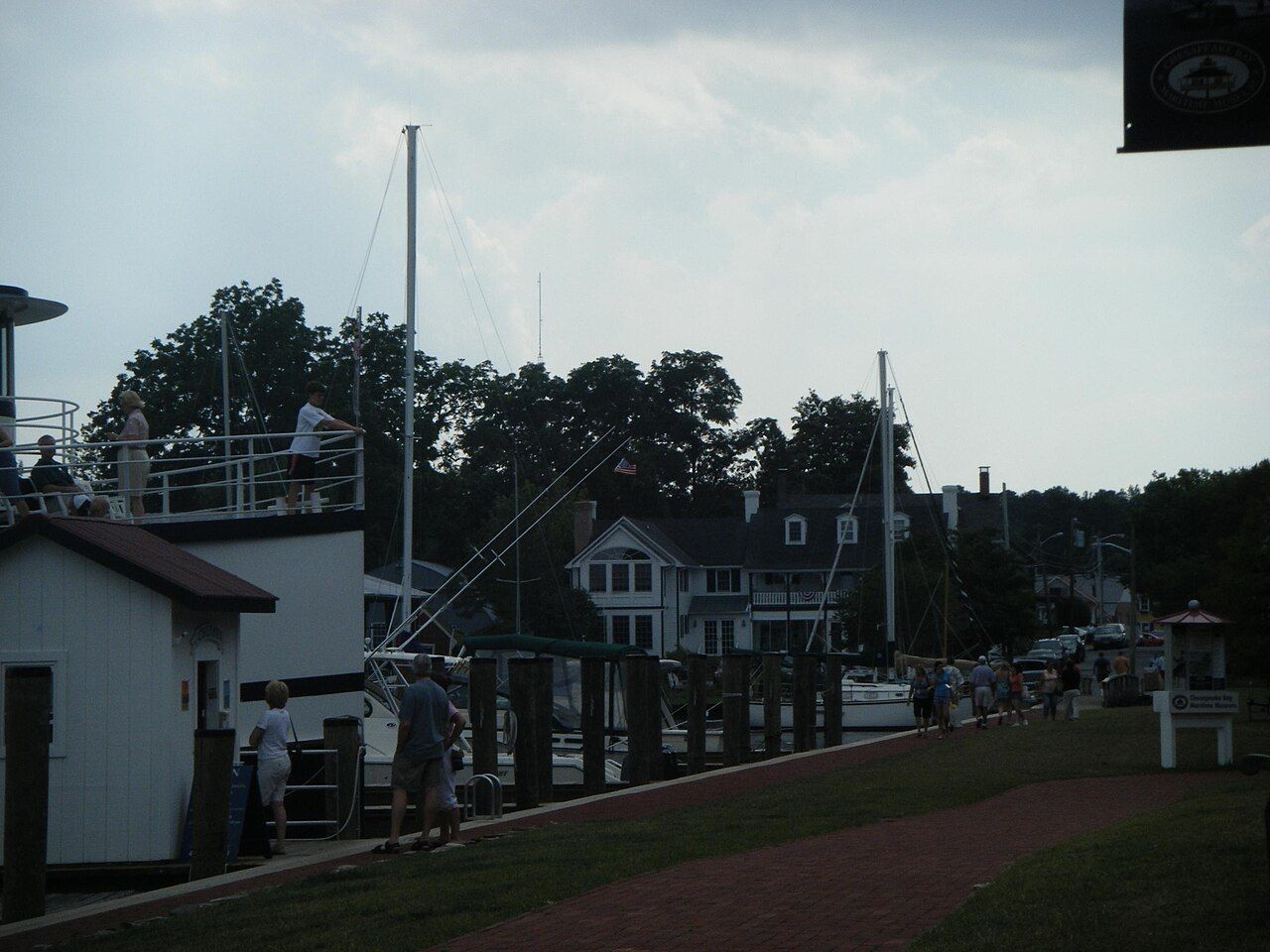
The museum's best known landmark is the Hooper Strait Lighthouse, a white hexagonal cottage with a lantern on its roof, raised on iron legs. It was built in 1879 to mark a channel in the lower bay, between Hooper's Island and Bloodsworth Island, and served there for most of a century. When it was due to be demolished in the 1960s, the museum moved it up the bay by barge and set it on the point, where you can climb inside.
Lights like this one, called screwpile lighthouses, stood on piles screwed into the soft bottom of the bay, and dozens once marked its shoals. Ice and age claimed most of them. Inside you see the keeper's quarters, the narrow stair and the lantern room, and from the gallery the whole harbor spreads out below.
Also enteredTilghman Island, where the road runs outThe War of 1812 story, told carefully
In August 1813, during the War of 1812, British forces raiding the Chesapeake attacked St. Michaels, a town whose shipyards had been building vessels used against them. Local militia had prepared batteries to defend the harbor, and the attack, made in darkness and early morning, was driven off with little loss.
A famous local story says that townspeople blacked out their houses and hung lanterns in the trees and masts, so that British gunners aimed too high and their shot passed over the town. That is why St. Michaels calls itself the town that fooled the British. It is a good story and a beloved one, but it was recorded long after the event, and historians treat the lantern trick as tradition rather than established fact. What is certain is that the town was attacked and defended, and that it survived largely intact.
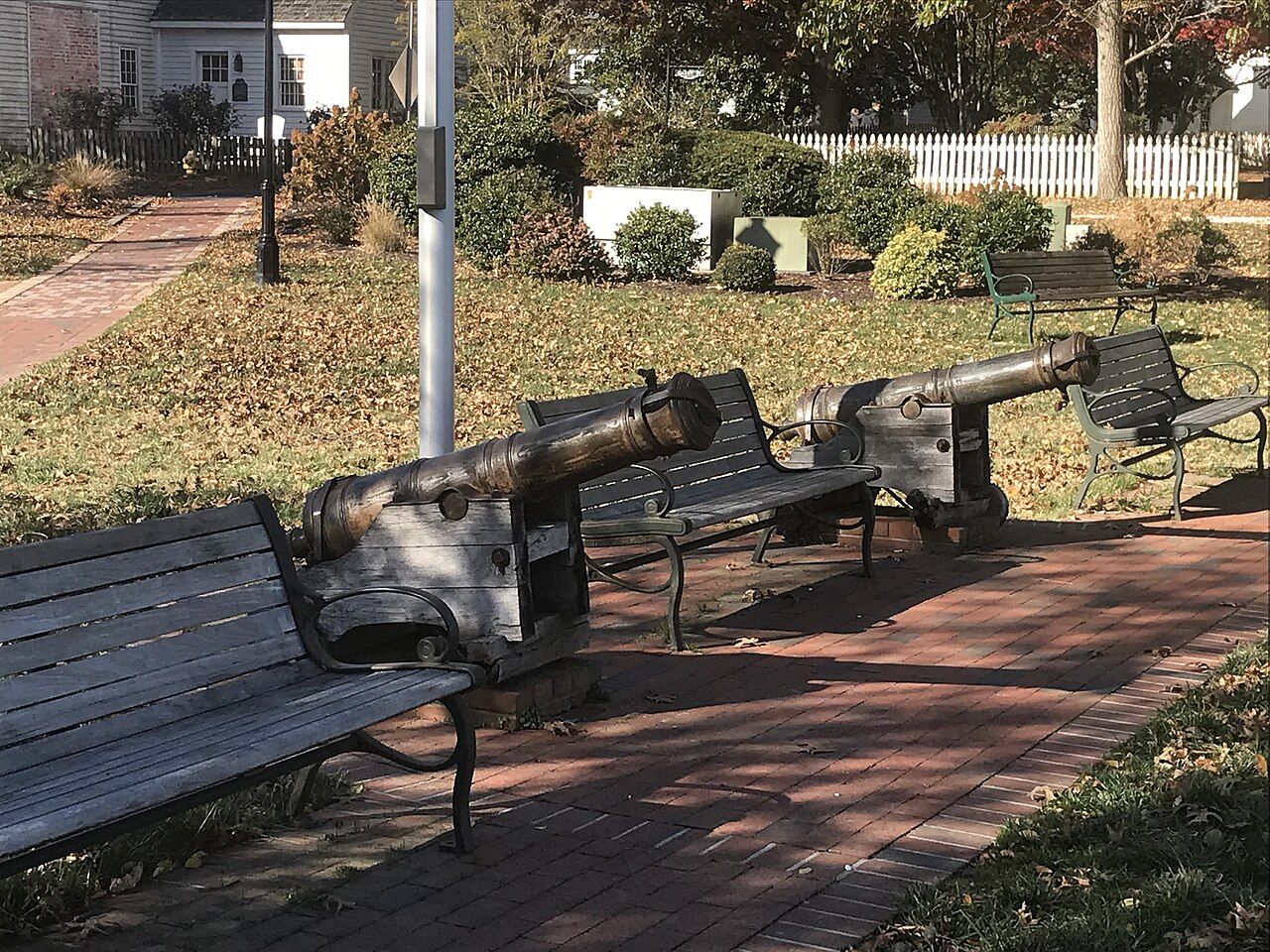
A small house on Mulberry Street is known for a cannonball that is said to have struck its roof during the raid. Old cannons now sit by the harbor, a reminder of the town's brush with the war.
It is a good story and a beloved one, but it was recorded long after the event, and historians treat the lantern trick as tradition rather than established fact.
Walking the town
The town is small enough to walk end to end in half an hour, which leaves plenty of time to wander. Talbot Street is the main commercial strip. Behind it, the side streets toward the harbor and San Domingo Creek hold many of the oldest houses: modest frame and brick dwellings of shipwrights, sailors and tradesmen, some going back to the early nineteenth century or before. St. Mary's Square, a green near the center of town, preserves the original layout and a small local museum.
A park beside the harbor, near Christ Church, has benches, a view of the water and the old cannons. It is the best place to sit and watch boats come and go. Look out across the river and you may see log canoes racing in summer: long, narrow sailing boats with enormous rigs, crewed by people who climb out on boards to keep them upright. Races on the Miles River are a long-standing summer tradition.
Leave time for the water side of town as well as the shops. The footpaths and small parks around the harbor give you changing views of the boats, the museum's lighthouse and the river beyond, and on a breezy afternoon the halyards ring against the masts all along the docks. Early morning, before the day visitors arrive, is the quietest and often the most beautiful time to walk them.
St. Michaels lies about ten miles west of Easton on Route 33, a flat road through farmland and woods with glimpses of creeks on either side. The drive is short, and the road is a popular ride for cyclists, though traffic can be heavy on summer weekends. A seasonal river ferry across the Tred Avon makes a loop through Oxford possible; for routes and advice, see cycling the flat Shore.
The kindest weather usually comes in May and again in late September and October. The weather is mild, the museum's boats are active and crowds are lighter than in high summer. Summer weekends bring the most visitors and the hardest parking. Winter is quiet; some places keep shorter hours, but the harbor in low winter light has its own beauty. Check the museum's current opening days and any event schedules before you go.